
More Information
Breathwork & Meditation
The brain produces electrical activity that can be measured as different frequencies:In traditional meditation, including many forms (Mindfulness, Zen, Vipassana), Beta activity gradually decreases & Alpha waves increase as the mind relaxes. Theta waves may increase during deeper meditation & some advanced meditators show bursts of Gamma activity associated with heightened awareness & compassion. The nervous system generally shifts toward increased parasympathetic activity - lower heart rate, lower respiratory rate & reduced stress hormones. People often describe calmness, stillness, spacious awareness & reduced mental chatter.Conscious Connected Breathing often produces a different neurological state because breathing is intentionally altered. During faster, continuous breathing, the nervous system activity changes significantly. Researchers have found that Breathwork practices can produce increased Theta activity, increased Alpha activity, temporary decreases in ordinary Beta thinking & occasionally Gamma bursts during peak experiences. People often report strong emotions surfacing, vivid imagery, altered states of consciousness, tingling sensations, feelings of transcendence or unity & emotional release.These can be experienced during a single CCB session, whereas meditation may take much longer to reach a similarly altered state. 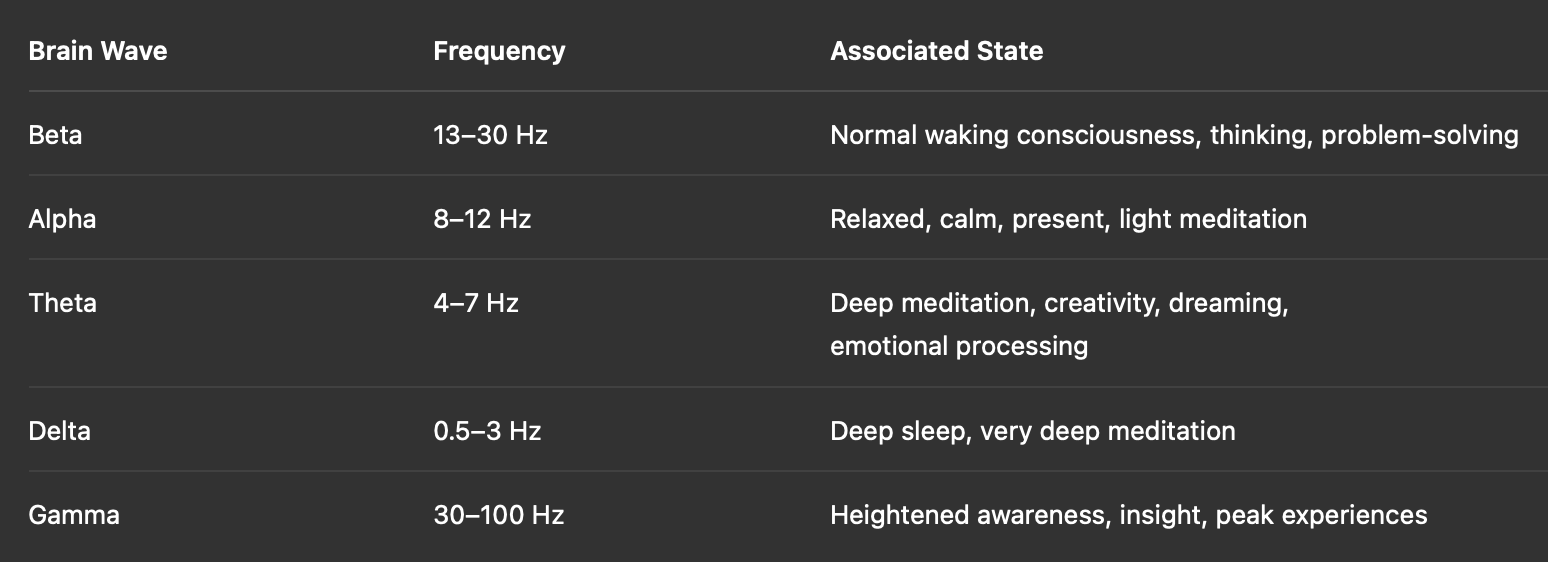
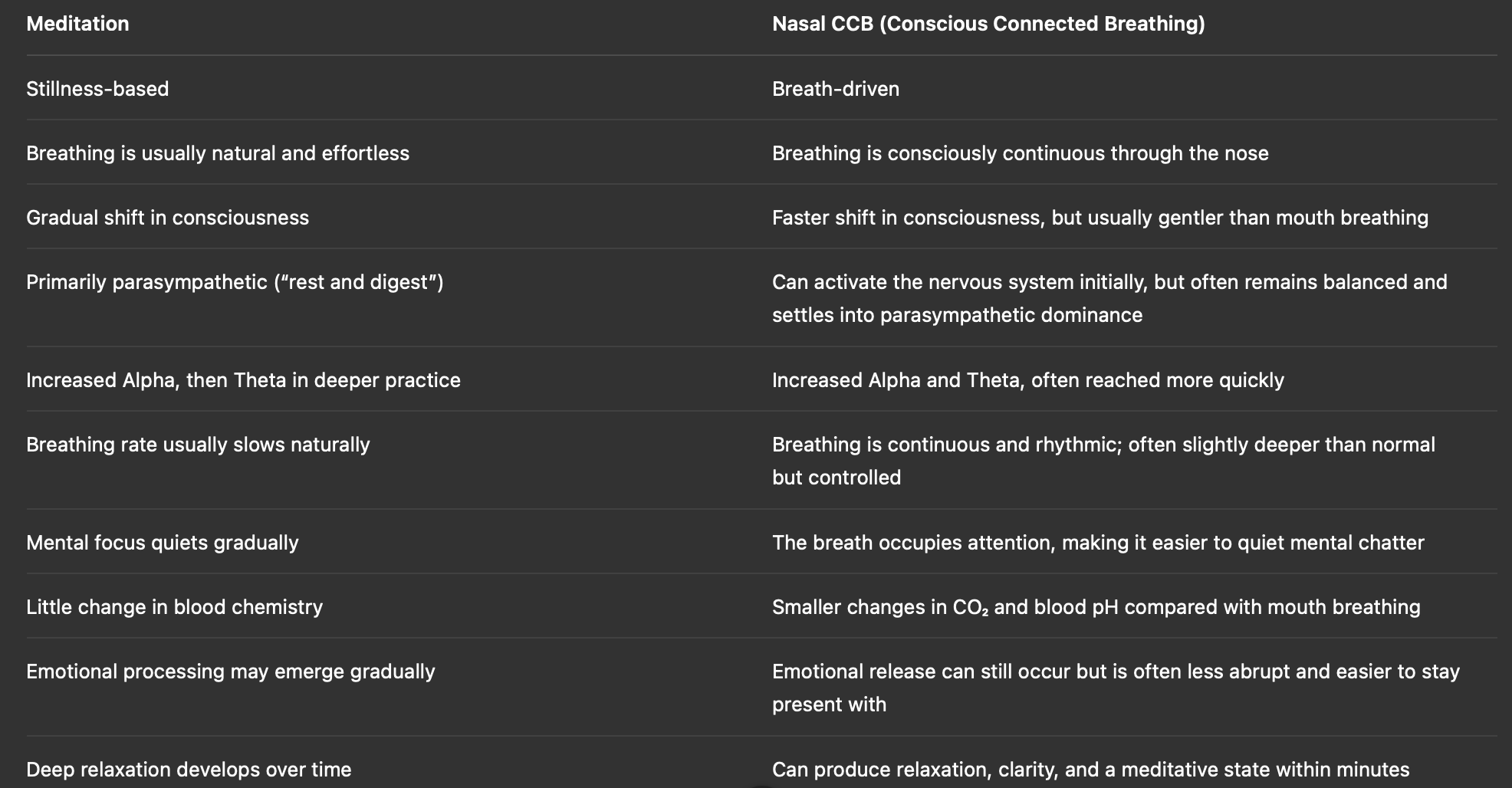
Both practices can lead to similar meditative brain states, but they take different routes. Meditation starts with training attention & awareness, while nasal CCB uses a conscious breathing pattern to influence the nervous system, which in turn calms the mind. For many people, nasal CCB can feel like a bridge between traditional meditation & more intense breathwork, offering many of the benefits of both with fewer of the stronger physiological effects seen in mouth-breathing techniques.Energetic Purification - Honouring the Elements
The goal of spiritual practices is to clean & balance our energy. Our emotions & the emotions of the people around us/the surroundings we spend time in, impact the energy in our body. If a workplace is stressful, we will accumulate stressful energy. The elements can be used to purify our energy.AIR - Breathwork, Pranayama practicesEARTH - Standing or sitting on the earth, Walking in the bush/forest, Bare feet on the ground, Being in nature, Hug or place palms on a treeFIRE - Fire gazing, Building a fire, Candle gazing, Sunset gazingWATER - Water not only cleanses our body, it also regenerates & transforms the negative energy that we accumulate during a day. Water fasting, Water bathing (bath or ocean), Showering can assist in the cleansing of your energy field. ETHER - Music, Sound healingBenefits of Being in Nature
Research suggests that spending time in nature influences several body systems at once, particularly the nervous, endocrine, cardiovascular, and immune systems.

Calms the Nervous System
Natural environments help shift the body away from the sympathetic nervous system and towards the parasympathetic nervous system. This can lead to:
* A slower heart rate.
* Lower blood pressure.
* Slower, deeper breathing.
* Increased heart rate variability (HRV), a marker of a more adaptable and resilient nervous system.

Reduces Stress Hormones
Time in nature has been associated with lower levels of cortisol, the body’s primary stress hormone. When cortisol remains elevated for long periods, it can contribute to anxiety, poor sleep, impaired immune function, and inflammation. Spending time in green spaces may help the body return to a more balanced physiological state.

Improves Brain Function
Natural environments appear to reduce mental fatigue by allowing the brain’s directed attention systems to recover. This is known as Attention Restoration Theory. As a result, many people experience:
* Improved concentration.
* Better memory.
* Greater creativity.
* Enhanced problem-solving ability.

Nature has also been associated with reduced activity in brain regions linked to repetitive negative thinking (rumination), which may help improve mood.

Supports Immune Function
Forests release airborne compounds called phytoncides, natural chemicals produced by trees to protect themselves from bacteria, fungi, and insects. Studies suggest that inhaling these compounds may increase the activity and number of natural killer (NK) cells, a type of white blood cell involved in the body’s first line of defence against viruses and abnormal cells. Some studies have found these effects can persist for several days after spending time in forests.

Reduces Inflammation
Chronic psychological stress contributes to persistent low-grade inflammation throughout the body. By reducing stress and lowering cortisol, time in nature may also help reduce inflammatory processes, although the exact mechanisms are still being studied.

Regulates the Cardiovascular System
Spending time in nature has been associated with:
* Lower blood pressure.
* Reduced heart rate.
* Improved blood vessel function.
* Reduced activity of the stress response.
These changes decrease the workload on the heart and support cardiovascular health.

Supports Healthy Sleep
Exposure to natural daylight helps regulate the body’s circadian rhythm by influencing the release of melatonin, the hormone that helps control sleep. Spending time outdoors during the day can improve sleep quality and make it easier to fall asleep at night.

Encourages Natural Breathing Patterns
People often breathe more slowly and comfortably when surrounded by natural environments. Reduced stress and improved parasympathetic activity can encourage more efficient breathing patterns, complementing practices such as conscious connected breathwork.
Options of Essential Oils & Benefits
Options of Hot or Cold Teas & Benefits
DMT & Breathwork
DMT (Dimethyltryptamine) is a naturally occuring compound found in plants, animals & the human body. It is believed to play a role in altered consciousness. vivid dreaming. It is believed that DMT is released in higher quantities at birth, death, near death experiences & possibly deep meditation & breathwork. While research is still evolving, deep rhythmic breathing has been linked to physiological changes that may stimulate or activate endogenous DMT production. Some traditions believe that deep Breathwork stimulates pineal function, potentially influencing DMT synthesis or receptor activity. Whether or not Breathwork directly releases DMT it activates the mind & body in ways that induce powerful altered states that can resemble psychedelic experiences, expand awareness & facilitate healing. Many participants report vivid visuals, deep emotional catharsis & clarity, expanded states of consciousness, profound insights & spiritual connection. Subconscious Mind
The subconscious mind is made up of thoughts, beliefs, memories, emotions, and learned patterns that exist outside of your conscious awareness. Many of these patterns develop through repeated life experiences, particularly during childhood. Often, a memory is linked with a physical sensation or emotional response that is stored in the body.
When experiences are stressful, overwhelming, or unresolved, the mind and body may continue to hold onto them. Over time, these experiences can shape your beliefs, perceptions, and automatic reactions without you even realising it.
Many of the emotions and behaviours that are triggered by situations today are influenced by experiences from your past that felt similar. In other words, your subconscious mind uses what it has learned before to interpret what is happening now.
This process happens automatically until you bring awareness to your triggers and begin to understand where they come from. With awareness comes the opportunity to respond differently, rather than reacting from old patterns.
Conscious Mind
The conscious mind is made up of the thoughts, beliefs, feelings, and memories that you are aware of. It influences how you see yourself and the world around you.
Supportive thoughts help you grow, create a sense of balance, and encourage positive experiences in your life.
Limiting thoughts often come from beliefs formed through past experiences, especially when we misunderstood or misinterpreted what happened. Over time, these beliefs can shape how we see ourselves and influence the choices we make, even when they are no longer true or helpful.
Belief Systems
Belief systems are the collection of beliefs we have about ourselves and the world around us. They influence our decisions, behaviours, thoughts, and habits. Many beliefs are formed through repeated life experiences, especially during childhood or after emotionally significant events. The more we think a belief, the stronger it becomes. Every person has both affirming beliefs and limiting beliefs. These beliefs shape our thoughts, which influence our behaviours and habits, often reinforcing the beliefs we already hold.We begin absorbing our parents thoughts & feelings when we are in the womb. Our own beliefs begin forming before we are born through our early environment & continue to develop throughout childhood. They are strongly shaped by our relationships and experiences, particularly during the first 7–8 years of life & become more solidified from 8 to late teens. We create an understanding of ourselves based on how others treat us. When something happens—big or small—we often form a belief about ourselves. If similar experiences happen repeatedly, that belief can become stronger.For example, a child who is repeatedly bullied may begin to believe they are not good enough. A teenager who experiences several difficult breakups may begin to believe they are unlovable. We then tend to interpret future situations in ways that support these beliefs, even when there may be other explanations. For example, each partner may have had their own personal reasons for ending the relationship, but the subconscious mind interprets it as confirmation of the existing belief.Most belief systems operate outside of our conscious awareness. We often accept them as facts, just as we accept that the sky is blue. As a result, they can become part of our identity, and we may unknowingly build our lives around them—for example, “I’m not smart enough to be a vet, I could never do that.” The good news is that beliefs are learned, which means they can also be changed.By bringing awareness to our beliefs, we can begin to question them, choose healthier thoughts, observe our behaviours and habits, and gradually create new, more supportive beliefs.Breathwork helps regulate the nervous system, creating a greater sense of safety, connection, and calm. From this more regulated state, it can become easier to notice and challenge limiting beliefs, while strengthening beliefs that support love, belonging, peace, and self-worth. Some beliefs are easier to change, while deeper core beliefs may resurface over time. Repeating affirmations alongside breathwork can be a powerful way to support this process and reinforce new ways of thinking.Trauma & the Nervous System
Trauma is any experience where an individual is unable to regulate their nervous system after a single event or a series of recurring events—both can be equally significant. It often begins in childhood, as children are naturally less able to regulate their nervous system, especially if their parents or caregivers have difficulty regulating their own. As Gabor Maté describes, “It shapes the way we live, the way we love, and the way we make sense of the world.” Everyone’s nervous system is different and is influenced by their caregivers, upbringing, and life experiences.

Acute trauma is a specific event, such as abuse or a traumatic accident. This trauma can be compounded if the individual is left alone with the experience—they have no one to talk to about it, or their experience is invalidated when they do. Long-term reactions may include unpredictable emotions, flashbacks, strained relationships, and even physical symptoms such as headaches or nausea.

Recurring events can seem small but, over time, can have just as significant an impact. Examples include teasing or bullying, emotional instability from a parent or caregiver, regular experiences of mild neglect, inconsistent parenting, disapproval or lack of approval, being repeatedly told you’re wrong, or verbal abuse. Regardless of how big or small the incident was, if the individual’s emotional needs were not met afterwards, they were unable to regulate their nervous system, and they felt alone in the process, the body and nervous system may respond to that experience as trauma.

As adults, we often repeat the behaviour patterns we experienced in our relationship with our parents or caregivers. Children naturally look to their parents to co-regulate their nervous system. If the parents are unable to regulate themselves, the child may struggle to learn how to regulate their own nervous system. An unregulated nervous system might show up as shouting, swearing, emotional outbursts, or relying on external substances such as alcohol.
Mind-Body Connection
The mind & body are connected, constantly influencing one another. When stress, challenging experiences or trauma are not fully processed, the mind stores the unresolved energy in the body as muscular tension, restricted breath, emotional suppression or energetic blockages. This occurs because the nervous system is designed to protect you. When faced with perceived threats (whether physical, emotional or psychological) the body responds through fight, flight, freeze or fawn mechanisms. If the experience is not fully integrated, the body holds onto the energy of the event, keeping it active beneath conscious awareness. Over time, these stored imprints shape your thoughts, emotional responses & behaviours, often manifesting as chronic tension or pain in the body, shallow or irregular breathing patterns, emotional numbness or hyper-reactivity, subconscious beliefs & habits that reinforce limitation. Breathwork serves as a bridge between the mind & the body, creating space for these stored energies to be acknowledged, processed & released. By consciously engaging with the breath, you can bypass mental resistance & directly access the body’s intelligence, allowing tension to unwind & energy to flow freely. Through this process, the nervous system recalibrates, fostering a deep sense of relaxation, clarity & embodiment. Emotions
Emotional intelligence refers to the ability to recognise, understand, regulate, & respond to emotions in ourselves and others. Some researchers suggest that emotional intelligence can be learned & strengthened. The more self-awareness an individual develops, the better they are able to identify their emotions & navigate them with greater awareness.Emotions are biological responses triggered by neurotransmitters & hormones released by the brain. Feelings are the conscious experience of those emotions. They are shaped by our personal experiences, beliefs, nervous system state, memories, & the thoughts we associate with a particular emotion.Some of us have been taught from a young age that “feeling is bad.” As a result, we often suppress difficult emotions. We may even shame ourselves for having feelings, which creates tension & stress within us. Over time, carrying unresolved emotional stress can contribute to ongoing feelings of discomfort & disharmony. These are often long-term patterns rather than just a few bad days.Offering yourself words of validation is a way of giving yourself permission to feel what you are feeling. This does not mean staying stuck in an emotion or emotional state, but rather allowing that part of yourself to be acknowledged & accepted. Sometimes, simply giving yourself permission to feel & witnessing the emotion without judgement is enough to help it soften & integrate.Forgiveness & making peace with an experience can help create acceptance of what happened. For many people, this can be a deeply healing practice, as it invites greater ease & compassion into what was once a painful experience. That said, not everyone is ready to forgive, & that is OK. Forgiveness cannot be forced—it can only happen when you are ready.Along with Breathwork, practices of yoga, meditation, cultivating a positive mind, utilising positive affirmations & eating a healthy diet are recommended. Spiritual purification with the elements of air, water, earth, fire is also encouraged. Breathwork is a complementary wellness practice & is not intended to diagnose, treat, cure or prevent any medical or mental health condition.